Showing posts with label covid19. Show all posts

Tuesday, September 8, 2020

School Meals and P-EBT Information for September


When school begins next week, many families want to know if school meal sites will still be available for pick up. There will be meal sites for families to pick up meals, but meals sites may look a bit different than they did in the spring.  

  • Meal distribution locations may have changed since this summer. Some counties are offering additional meal pickup locations via bus delivery. Visit MDsummermeals.org for location information.
  • Parents or caregivers will be able to pick up meals for their children (they will not need to have the children present to pick up meals).  -Families will be able to pick up breakfast and lunch meals for Monday-Friday. Depending on the county, more than one day’s worth of meals might be distributed at one time. In that case, meal pick up would be open 2-4 days a week.
  • Check your county school system’s website for the most current information.

Many families will be receiving additional money on their EBT cards during the month of September. The extra money is to help families cover the cost of feeding their families while schools are still closed due to COVID-19. Here’s what you need to know about the P-EBT benefits:

  •  Students enrolled in free or reduced-price school meals are eligible for P-EBT benefits.
  • If your child’s school provides free meals to all students, your family will receive P-EBT benefits.
  • Each eligible student will receive $5.86 per day that schools are closed in September.
  • Students with SNAP will receive P-EBT directly on their EBT cards.
  •  Students eligible for P-EBT, but not receiving SNAP, will have September benefits added to the same P-EBT card they received earlier this summer.
    • If this card is lost, call the EBT call center or submit an online “customer inquiry” to request a new one.
  • All September benefits will be distributed before September 30, 2020.

If you have questions about P-EBT, families can call the Maryland P-EBT Hotline at 1-833-330-7328 and they can also complete a “customer inquiry form” if they need help.

 Visit the Department or Human Services website for additional information: https://dhs.maryland.gov/p-ebt/


Monday, July 13, 2020

Summer Activities (COVID-style)

Para español, haga clic aquí.

After a rainy spring, it’s a relief to take advantage of the warm weather outside! But unfortunately during the COVID-19 pandemic, we might not be able to do all of our favorite summer outings and activities. Here are some ideas for getting outside and being active as a family:
  • Create an outdoor obstacle course outside using toys or things from around the house, like balls, cones, jump ropes, and cardboard boxes. Get creative! See who in your family can make it through the fastest, then try running the same course with a bike or scooter.
  • Get out and enjoy nature! If you have a nearby park, go for a walk there, or go on a neighborhood wildflower walk to see how many different plants and flowers you can find. Or go for a Letter Scavenger Hunt (find instructions here)!
  • Balloon fun: Throw a blown-up balloon into the air and see how long you can keep it in the air without letting it touch the ground. Or go further and play balloon tennis! Take a paper plate and attach a paint stirring stick or something similar for a handle. That’s your tennis racket and use the balloon as your tennis ball. For more ideas, watch this video.
  • Find a Citizen Science Project here on a topic your family is interested in. Many of the projects will get you outside and interacting with nature.
  • Hold your own Summer Olympics for your family! Include different games and activities that your family members excel at from a dance competition to crossword puzzles. For some cooling fun, add water games. For example, give each player a full cup of water. One at a time, each player must jump rope for ten turns while holding their cup. The player with the most water still in their cup wins.
  • Draw a game board on the sidewalk with chalk and make up the rules. Kids can become life-size pieces in a game of your own invention.
  • Take the “Create Your Own State Park” Summer Challenge from Maryland’s Department of Natural Resources. It includes all kinds of activities to turn the outdoor space around your home into a State Park! If you complete the challenge, you can enter to receive an  official certificate from Maryland State Parks and win prizes.
  • Make art outside: Paint the sidewalk with water. See how fast the sun makes your art disappear. Draw big chalk murals that encourage your neighbors to add to it (while socially distanced). See what kind of art you can create using nature and found objects.
 
For even more ideas, check out this Activity Library!


Thursday, July 9, 2020

Farmers' Markets are Open!

Para español, haga clic aquí.

Shop at your community farmers’ market for healthy, fresh food.  You can buy fresh fruits and vegetables and other foods like milk, eggs, meat, and cheese.  Most community farmers’ markets and farm stands will be open this spring, summer, and fall. 
Because of COVID-19, farmers and markets are working hard to make shopping at the farmers’ market as safe as possible.  Watch this video to learn more about shopping at the farmers’ market this season: Safe Shopping is a SNAP at the Farmers' Market 
This year, things will be a little different at the farmers’ market. Make a shopping list before you go, bring hand sanitizer and look for hand washing stations at the market to clean your hands often.  Bring a shopping bag to carry your food home.  Bring your SNAP/EBT card, eWIC, or FMNP checks if you plan to pay with these.
Follow these easy steps to keep your family and your food safe:
  1. Do not go to the market if you are feeling sick.
  2. Wear a mask that covers your nose and mouth.
  3. Bring and use hand sanitizer.
  4. When possible, only one person from your family should go to the market.
  5. Leave pets at home.
  6. Do not touch your face while you are away from home.
  7. Wash your hands with soap and water for at least 20 seconds, when you get home.
  8. Wash fresh produce under running water before you put it away.  Do not use soap to wash fruits and vegetables.
  9. Wash the counter and sink with soap and water after washed produce is put away.

Friday, June 26, 2020

Being Active While Being At Home

Para español, haga clic aquí.

During the summer, everyone loves to spend time outside and enjoy all that warm weather has to offer. This summer may look a little differently due to COVID-19. We are able to get outside, but may not be able to gather as groups of family and friends to enjoy activities like normal.  There are still ways that your family can be active even while being at home.

Try these activities this summer!

       ❑ Stair challenge: Run up and down the stairs five times in a row. Do three sets!
       ❑ Spell with your body! Learn movements for each letter of the alphabet and spell words for a
           family member--see if they can guess what you’re spelling!: go.umd.edu/alphabet-activities
       ❑ Crab walk to every room in your house (wash your hands when you’re done!).
       ❑ Scavenger hunt: Have a family member hide five objects around your house, such as a
            stuffed animal, a hat, a book, a toy, and a shoe. See how fast you can find them.
       ❑ Hallway Soccer: Make your hallway your new soccer field. All you need is a soft ball or sock
            ball and a family member. Score!

If you are looking for activities outside, try these:

       ❑ Water play!  Turn on the sprinklers and run through them! Each family member can hop,
            skip, or jump their way around the yard!
       ❑ Sidewalk Chalk:  Create an obstacle course down your sidewalk with sidewalk chalk. See
            how long you can make your obstacle course. See how long it takes each family member to
            complete.
       ❑ Hula hoop contest: Each family member can take their turn at hula hooping to see how long
            they can keep the hoop from falling to the ground. 
       ❑ Bat the balloon: Blow up a balloon and tap it back and forth to keep it from touching the
            ground.

Since it is really hot outside, make sure to keep reusable water bottles filled with cold water ready when you are thirsty!

Monday, June 22, 2020

STOP, REFLECT, RESET – Focus on the Basics!

Para español, haga clic aquí.


Our lives have been turned upside down by the COVID-19 pandemic. Feeling overwhelmed? Stop, take a few minutes to quietly reflect and focus on the basics – food, moving your body, water, and sleep. This will keep you healthy and better prepared to deal with all the changes and challenges going on around you.

Eat Healthy
Comfort food is the first thing we reach for in times of crisis. Consider these family favorites to keep your loved ones healthy:


Other ways to get more fruits and vegetables into your meals:
  • Add chopped vegetables like sweet peppers, onions, tomato, or spinach to scrambled eggs.
  • Double the amount of vegetables in soups, stews and casseroles.
  • Serve a side dish of roasted or steamed vegetables with your main dish.

Get Your Body Moving
It seems like sitting would be the best choice if you have no energy, but actually the opposite is true! Your body is designed to be moving. Even a short walk will help you to have more energy and be more alert.

But with life in turmoil who has time for this? Did you know that doing three household activities for 5 minutes, like sweeping the floor, putting away laundry or unloading groceries, counts as 15 minutes of moving your body? You CAN do it!

Try fun physical activities and vegetable themes games with your family or check out the Eat Smart, Be Fit Maryland website for more ideas.

Drink Water
Your body is made up of almost 70% water! It helps your blood to circulate to allow you to think and move better. It helps digest your food which improves your gut health. And being hydrated improves your ability to fight illness and stay healthy.

Giving up a sugary beverage can be challenging especially when you want a familiar flavor. Here are some easy ideas for adding flavor to your water:
  • Love citrus? Add sliced lemons, oranges or limes.
  • Love cool sliced cucumbers? Add a few sliced cucumbers.
  • Love 100% juice, but not the extra calories? Add a splash of your favorite 100% juice to your water. (Not enough juicy taste? Start off with juice that you add a bit of water to. Increase the water and decrease the juice until you find the balance best for you.)
Water is the best choice for your family. Find creative ways to rethink your drink.

Sleep 7-8 Hours
During periods of great stress getting enough sleep can be challenging because your mind is racing, you have so much to do, and there may be extra worries. You may find that even when you find the time to lay down, you cannot fall asleep.

Sleep is critical to your health and well-being. It helps your brain to rest and process new information. This is important with all the important news we are learning during this COVID-19 pandemic. When you are well rested your body can regulate your weight better, has more energy, and you are in a better mood. Sleep also increases heart health and allows your body to fight off germs.

Here are some strategies to help you get more rest.
  • Try to create a consistent nightly bedtime and morning wake up time. This helps your body know when it is supposed to be sleeping.
  • Establish a soothing pre-bedtime routine. Take a bath, read a book, listen to music, or practice relaxing stretching.
  • Make the place you sleep as quiet, dark, cool and comfortable as possible.
  • Avoid caffeine for four to six hours before bedtime.
  • Try not to eat heavy meals just before bedtime.
For more restful ideas look at Sweet Dreams: Your Guide to Good Sleep in Quarantine

Monday, June 15, 2020

Healthy Snacks Straight from Your Pantry!

Para español, haga clic aquí.

As part of trying to stay home and be safe, we are making fewer trips to the grocery store and may be finding less of a variety of foods than we are used to seeing when we get there.  This can feel overwhelming as we are also preparing more meals at home—including snacks—both for ourselves and for children who would normally be at school during the day.  Here are some grocery shopping tips for making healthy snacks from your pantry a breeze, and some snack ideas to keep you satisfied until your next trip to the store!

Shopping tips:

  • Check the pantry, freezer, and refrigerator to see what you already have
  • Make a list of the items you need
  • Eat a variety of fruits and vegetables: fresh, frozen, and canned
  • Use fresh food first, then use frozen and canned foods next

The pantry/refrigerator/freezer items below are foods that are still regularly available in supermarkets and grocery stores. Again, buying a mix of fresh, frozen, and canned will allow you to still have a mix of healthy foods for snacks until you are able to go to the store again.


Pantry Items
Proteins
Grains
Fruits/Vegetables
Nuts and seeds
Nuts and seed butters
Canned chickpeas
Whole grain crackers
Whole grain cereal
Popcorn kernels/microwave popcorn
Pretzels
Baked tortilla chips
Rice cakes
Dried fruit
Applesauce
Canned fruit (no sugar added)
Jarred salsa
Bananas
Cherry or Grape tomatoes


Keeps Well in the Refrigerator/Freezer
Proteins/Dairy
Fruit
Vegetables
Yogurt
Cottage cheese
Cheese sticks
Apples
Pears (refrigerate once ripe)
Oranges
Grapefruit
Grapes
Carrots
Broccoli
Cauliflower
Kale
Frozen spinach
Frozen edamame

Let’s make some snacks!

Make some snacks with these foods from your pantry:

  • Cottage cheese and frozen spinach
    Dilly Spinach Dip.  Serve with raw carrots, broccoli, cauliflower, or cherry/grape tomatoes; whole wheat crackers, or pretzels.


  • Yogurt, fresh/frozen/canned fruit, whole grain cereal, nuts
    Yogurt Parfait. Feel free to change this recipe a bit by using your favorite fruit, cereal, and nuts.

  • Dried fruit, nuts/seeds, whole grain cereal, popcorn, pretzels
    Trail Mix.  Mix one cup of whole grain cereal and one cup of popcorn or pretzels with ¼ cup dried fruit (raisins, dried cranberries, cut dried apricots) and ¼ cup nuts or seeds.

  • Popcorn kernels
    Homemade Popcorn.  Use in Trail Mix (above)

  • Fresh/dried/canned fruit, cheese, and crackers
    Make a cheese plate! Serve cut up fresh fruit or dried fruit with string cheese and whole grain crackers.

  • Fruit and nut or seed butter
    Serve fresh cut apples, pears, or bananas with a tablespoon of your favorite nut or seed butter.

  • Jarred salsa
    Serve with baked tortilla chips or fresh cut vegetables.

Monday, June 8, 2020

Manage Your Health during COVID-19

Para español, haga clic aquí.


It is very important to take care of your health during COVID-19! Leading a healthy lifestyle will help you and your family cope better during this uncertain time. You can do that by eating well, exercising and taking care of your mental health. Here are some tips for these three categories.


1. Healthy Eating:
Get started with a healthy meal plan.  Planning ahead can help to stretch food dollars.  You can also use your fresh foods first, then use your frozen and canned food later.  Visit http://eatsmartmd.blogspot.com/2020/04/healthy-eating-during-covid-19.html for more tips on how to eat healthy.  While your children are home with you, get them involved in food preparation, such as stirring, chopping, adding ingredients, and cleaning up.  It is also important to allow your children to help make meal choices.  Visit https://eatsmart.umd.edu/recipe/recipesearch to search for new recipes.  

Safe shopping and handling of food is also important.  Always remember to limit your trips to the grocery store or farmers market and write a shopping list before you go to save you time spent there. When preparing food at home, practice good hygiene, serving, and eating food to stay food-safe. Do not forget to wash your hands with soap and water for 20 seconds before and after you handle food or food packages. Wash fresh produce under running water for 20 seconds, and after food is unpacked and put away, sanitize the countertop with soap and water and let it air dry.

There are many ways you can access and eat healthy during this uncertain time. You can locate your local food bank by visiting https://mdfoodbank.org/find-food/.  For children 18 years and younger, check www.mdsummermeals.org to find a feeding site close to you.


2. Being physically active:
There are many different ways to stay physically active.  . It can be as simple as taking the family out for a walk. But sometimes when the weather is too cool or wet, you can simply put some music on and have a dance party! If you have stairs, run up and down five times with your children. Try to do more than one set.  Your children can also learn to spell using movements of their bodies check:  www.go.umd.edu/alphabet-activities for word inspiration. Another fun family activity is going on a scavenger hunt, have a family member hide five objects around your house and see how fast the rest of the family can find them.


3. Taking care of your mental health: 

It is normal to feel stressed during this time. But trying to maintain healthy habits will help you stay positive.  Other than eating healthy and exercising, try to get enough sleep and stay connected with loved ones. Social distancing does not mean being isolated. Try breathing exercises as a family. Get in touch with extended family and friends using your phone, email or social media. Also avoid excessive exposure to media coverage of COVID-19. For additional resources related to mental health visit Maryland's Crisis Helpline: Call 211 and press 1, text 898-211, or visit 211md.org  for information or to chat confidentially about local services and programs. For families, call Maryland Family Tree 24/7 Parenting HelpLine: 1-800-243-7337

Do not forget to visit our page often for regular updates. Remember you are the child’s role model! Lead by example and remember we are here to help your family stay healthy and safe during this time!


Tuesday, May 26, 2020

Kitchen Gardening during COVID-19

During these challenging times, we could all use a little happiness and hope.  There is nothing quite like the excitement of growing, nurturing, and harvesting your own food to bring a sense of hope into your home.  Gardens are also a great way to bring family together to help nourish an interest in growing and eating fresh fruits and vegetables. 

Unfortunately, there have been shortages of many important items, such as fresh produce, meat, and dairy products.   The good news is that you can start a kitchen garden using items that you may already have in your pantry or refrigerator.  Many fruits and vegetables can be regrown using scraps that you might normally throw away, such as the ends of a bunch of celery, a head of lettuce, onions, and even garlic!   You can also plant dried beans, seeds from your favorite fruits and vegetables, and sprouts from potatoes or sweet potatoes! 

Some of the easiest things to grow are lettuce and celery.  To get started:

  • Cut off the end piece of the stem, or “stump”, which is the bottom of the plant, leaving about 2 inches of the plant.
  • Place the stump in a shallow dish of water.
  • Change the water every other day.   (You will see growth in as little as 3 days!)
  • Lettuce can be harvested by cutting off lettuce leaves as they get bigger, and it will keep growing for several harvests. 
  • Celery leaves and stalks can be harvested by cutting off what you need and it will keep growing.  
  • Both plants can survive for quite a long time in water in the kitchen, or can be planted into a container using potting soil.  

Another fun garden to start in the kitchen is beans.  To get started:


  • You will need a few dried beans, such as black beans, pinto beans, lentils, or black-eyed peas.
  • Place the beans in a wet paper towel and fold it in half, then in a clear sandwich bag, leaving a corner of the bag unsealed.   
  • Keep the beans in the bag for up to a week.  
  • Place the bag in a warm location, such as the top of your refrigerator or a sunny window to keep it warm until it sprouts.  (Make sure the paper towel stays moist 
  • After about 7-14 days, you can plant them in a large reusable grocery bag in potting mix and move them outdoors.  
  • Keep your plants watered and support the vines with a trellis, fence or other structure as they grow.
 

Tomatoes and other fruits and veggies with seeds can be regrown using their seeds.  To get started:

  • You will need to either take a thin slice of the tomato or remove the seeds and place them in a shallow dish of water.  (Just enough water to cover the bottom of the dish.)
  • After the seeds have begun to sprout, the slice of tomato with the seeds or the individual seeds can be planted in a small container with potting soil to continue to grow.  (These seedlings can be kept indoors near a sunny window.) 
  • When the seedlings are about 2-3 inches tall, you can thin them out and plant individual plants in a large containers or in the ground.  (Be sure to share plants with your friends and neighbors!)

Finally, you can save a trip to the garden store and save money on containers by recycling containers from your kitchen.  One of the best containers for home gardens is a gallon milk jug.  All you will need to do is cut off the top half and make small holes in the bottom for drainage.  Add your potting mix, and plants.  Save the top of the jug and tap the lid on to use as a scoop for the potting soil!  You can also recycle plastic coffee containers, margarine or yogurt containers, and the clear plastic containers from produce.  If the container has holes in the bottom, line it with a moist paper towel or coffee filters. 

Get your family involved in growing and trying new foods!  The experience of growing, nurturing, and tasting new food from the garden can become a family fun adventure!


Monday, May 18, 2020

All Forms Count!

Para español, haga clic aquí.


Right now, it is important to stay at home. Buying produce that lasts longer in your refrigerator, in your freezer, or on your countertop, means you can go to the grocery store less often. When it is time to go to the store, plan ahead and make a shopping list that includes a variety of long-lasting vegetables and fruits to nourish yourself and your family.

Vegetables: Choose fresh vegetables that will last longer:

Store in the refrigerator:
Beets, carrots, kale, spinach, collard greens, cabbage, cauliflower, parsnips, rutabagas, turnips, Brussels sprouts
Store in the pantry or on the countertop:
Tomatoes, sweet and white potatoes, winter squash, onions, garlic
Choose canned and frozen vegetables without added salt, sugar, or creamy sauces.  Rinse canned veggies to remove added salt.
Fruits:  Choose fresh fruit that will last longer.
Store in the refrigerator:
Apples, oranges, lemons and limes, grapefruit, ripe pears
Choose canned and frozen fruit without added sugar.  Rinse canned fruit to remove sugary syrup.

Use foods you have on hand to make healthy meals and snacks:  All forms count!  Using fresh, frozen, and canned foods are all healthy choices.  Swap foods you already have in recipes: canned tuna instead of canned chicken, spinach instead of kale, pasta instead of rice, beans instead of meat, applesauce or pumpkin instead of fresh, canned, or frozen fruit.
 Combine foods from each food group to make a healthy meal.  Click on the link to read the recipe idea.  Swap ingredients as needed and follow the recipe steps, using foods you already have at home.


Try These Recipe Combos Choose Vegetable or Fruit (Fresh, frozen, canned) Choose
Protein
Choose Grain Choose
Dairy
Baked Casserole broccoli carrots spinach collards kale parsnips turnips canned chicken canned tuna canned salmon pasta
rice barley
cottage cheese
grated cheese
Stir-Fry cabbage broccoli carrots
onions garlic
potatoes
tofu
beef chicken
turkey pork
rice
quinoa
Eggs Mexicali salsa
canned tomatoes
eggs
beans
tortillas bread cheese
Baked Oatmeal berries bananas applesauce canned pumpkin egg oats milk
soy milk almond milk
Bean Tacos onion
garlic
cooked or canned beans tortillas cheese
plain yogurt sour cream

Tuesday, May 12, 2020

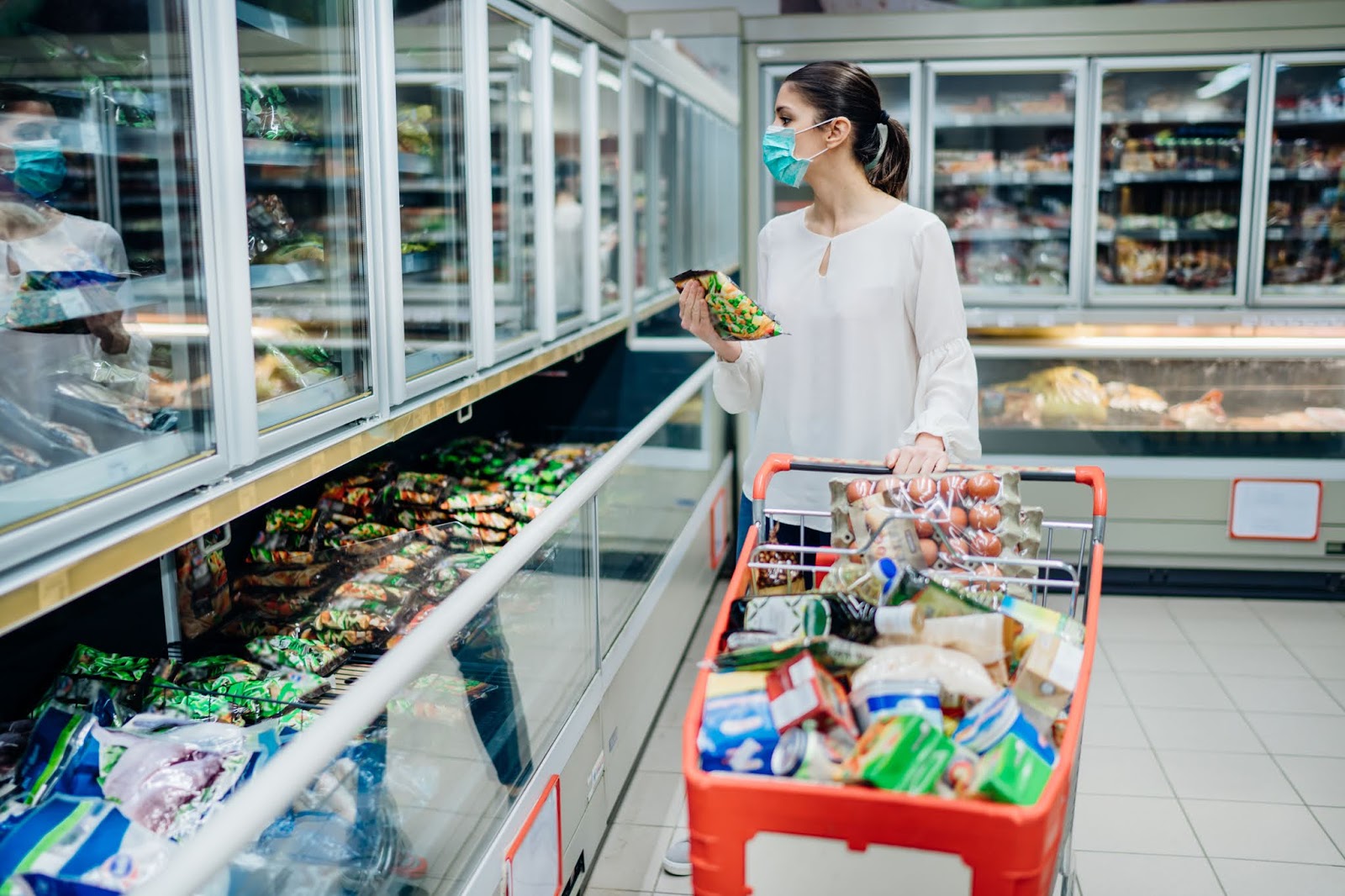
Safe Grocery Shopping during COVID-19

Para español, haga clic aquí.

This blog provides best practices to help your household think of ways to meet your food needs while reducing and eliminating exposure to COVID-19 and other foodborne risks.  Keep in mind that maintaining good personal and home hygiene, safe food handling, and social distancing is very important when you are planning to shop for food.  Before your next grocery purchase, review the following tips. 

Step 1: What are your food shopping options? Healthy or not, you may choose to use other food shopping methods to keep socially distant from others, such as online shopping or apps. 

  • Online shopping is one option.  You can keep current on your latest options by visiting:  SNAP-Ed Online purchasing
  • Grocery store curbside pickup/deliveries.
  • Buying from local farms. Use http://marylandsbest.net/ to find: 
      • local farmers markets
      • community supported agriculture (CSA)
      • farm-home delivery services
      • roadside stands 
      • pick your own farms or U-pick-where you go and pick your produce

Step 2: When leaving your home to shop for food: Call or visit the store’s website to see if they have updates related to customer expectations, such as not bringing your own bag to the store or special hours for seniors or immuno-compromised individuals for example. You may also find updates as to how the store is maintaining safety during the pandemic.

Before you go, you will want to plan ahead: 


  • Plan meals for the week by visiting our website  https://www.eatsmart.umd.edu/recipes for great ideas the whole family will enjoy.
  • Write a shopping list of items you will need for at least a week to reduce how often you need to leave home. This will help you to get in and out of the store quickly.  Also, remember that buying frozen, canned, and dried produce can still be part of a healthy diet, and extend the time between food shopping trips.
  • Know who is going shopping-If possible, send one healthy household member to shop.
  • Wear a facemask in the store-If you do not have access to a disposable or cloth facemask, see if the store may provide one. Learn how to make your own facemask at home and how to wear it correctly. 
  • Keep hand sanitizer with you-If you are not able to wash your hands, use at least 60% alcohol-based hand sanitizer before and after shopping. Your alcohol-based hand sanitizer works best when you use a dime-size amount, and your hands are 100% dry after using it.
  • Limit your cell phone use-Reduce your need to use your cell phone when shopping because cell phones are known to carry germs.


Step 3: Be safe while you are shopping: 
  • Use & throw out disinfecting wipes- Use the provided disinfectant wipes, to wipe down shopping cart handles. Make sure you throw out the wipes in the trash, and do NOT leave wipes in the shopping cart.
  • Think about what your hands will touch-Try not to touch your face, hair, glasses, mouth, eyes, and phone when shopping.
  • Follow signs-to keep 6 feet-socially distant from other shoppers and employees, as well as following the expected customer path to the checkout counter.
  • Only touch what you take-Be considerate of the people who also want to touch low-handled foods. For example, reduce how many bananas you will touch before grabbing the perfect bunch of bananas.
  • Use plastic bags-to bag fresh produce, as well as meat, poultry, and fish.
  • Be prepared for delays-If a store limits the number of shoppers. Plan for extra time to food shop, but try not to hold up others when deciding on two different brands of the same food item. 


Step 4: Handling food items safely at home:  Food and food packaging has NOT been identified as a source of transmitting COVID-19. Store food as you would normally, but throw out the plastic or paper bag grocery bag, and wash your hands when you are done putting groceries away.


More questions about food safety and COVID-19? Visit: https://extension.umd.edu/foodsafety

Friday, May 1, 2020

Food Pantry Finds

Para español, haga clic aquí.
Right now it can be hard to get all the items on your shopping list. Visit your home pantry to find creative ways to use what you already have!

Here are 7 tips on how to fully take advantage of your food pantry finds.

  1. Substitute ingredients:  You can swap ingredients in your favorite recipes with  ingredients from your food pantry. For example,
    • Use  applesauce in baked dishes  in place  of oil or butter. 
    • Swap canned or frozen vegetables in place of fresh, or try a different veggie. 
    • Try dried herbs in cooking instead of fresh herbs. 
    • Use yogurt instead of sour cream and mayonnaise. Yogurt is a healthier alternative to sour cream or mayonnaise. 
    • Use beans in cooking instead of meat.
  2. Get creative with beans: Beans are a great source of protein and are commonly found in our home pantry.
  3. Don’t forget peanut butter: Peanut butter is a great source of protein and easy to store in your pantry.
    • Use peanut butter as a sauce for dipping or in a stir-fry.
    • Try it instead of oil in your pancake batter.
    • Give your smoothies an extra boost of protein. Try this peanut butter energy smoothie recipe. 
  4. Stock up on canned tomatoes: You may have several different types of canned tomatoes at home.
    • Use tomato paste and diced tomatoes instead of fresh tomatoes.
    • Make your own pasta sauce by adding canned tomatoes to garlic and onions and simmering with herbs. 
    • Add to stews and soups. Try this vegetable lentil soup.
  5. Grab some rice: Brown rice is filling, works great in many dishes.
  6. Befriend your freezer: Stock your freezer when you find sales at the grocery store.
    • Divide the extra food  into portions and freeze it.
    • Dried  beans can be frozen after cooking them.
    • Don’t forget to label and date your frozen foods. 
    • If you want to learn more about how to freeze a specific food,  visit: https://nchfp.uga.edu/how/freeze.html
  7. Plan your grocery shopping: Check your pantry before going grocery shopping. Once you have these groceries, you can plan your meals around what you have on hand.

Friday, April 24, 2020

Keep Moving at Home


Para español, haga clic aquí.

Kids and adults need to move each day to be healthy. Many of the things we normally do, like walking to the bus stop or climbing the stairs at work are not possible as we stay at home to be safe.

With a little creativity, your home can be your gym. Moving more helps you cope with stress. Making physical activity and active family games a part of each day creates a fun routine to help you and your family through these challenging days.

Try these ideas for kids and adults:


Kids: Be active for 60 minutes each day.

  • Challenge kids to crab walk to every room in the house. Try frog leaps and bear crawls!
  • Play hallway soccer with a squishy ball or sock ball.
  • Hide some items around the house for kids to find. Set a timer and make it a race.
  • Teach kids movements for every letter of the alphabet. Then have them spell words with their body.

For adults: Be active for 30 minutes on most days.

  • Use your big muscle groups: squatting, walking the stairs, or any other activity that uses your thigh muscles gets your heart rate up quickly. Add these movements into daily chores and tasks!
  • YouTube workouts: Who needs a gym membership? Try these free exercise classes for all fitness levels. Try Fitness Blender, Walk at Home, or Blogilates.
  • Buddy up: Ask a friend to commit to being active each day. Check in on one another, and share the ways you are moving!
  • Workout with an online coach. Athletes are helping us stay active at home through social media. Here’s one to start with: oliviafitmomof3 on Instagram.


For everyone:
  • Spend time outside with members of your household. Keep a safe distance (6 feet) from neighbors.
  • Take long walks, play a game of tag, and watch the season’s change. It’s good for the body, mind, and spirit.
  • Turn on some music and dance! It’ll lift your heart rate and your mood.
  • Take deep breaths. We’ll all get through this together.

Thursday, April 2, 2020

Healthy Eating During COVID-19

Para español, haga clic aquí.


This blog will help you choose a variety of healthy food options while trying to limit trips outside your home due to the current COVID-19 situation. Below are some tips on how to stock your kitchen along with meal plan ideas enough for one week.  With a little planning you can make sure you feed your family balanced meals that are simple and help boost their immune system. Remember to wash your hands with soap for at least 20 seconds before handling food, handwashing protects against COVID-19!

For your pantry:
  1. Beans and legumes (canned or dried): A great source of protein! You can add them to soups, salads and main dishes. Cooking with dried beans? Check this blog post that contains tips. 
  2. Peanut butter and other nut butters: Also a great source of protein! You can spread it on bread or a fruit like banana. Visit our blog post on cooking with peanut butter.
  3. Whole grain pasta, brown rice and quinoa:  A great source of fiber and good carbs. Watch this video to show you how to cook brown rice.  Also this blog post shows you different ways to prepare quinoa.
  4. Canned tuna and chicken in water: A great source of protein! Can be used in salads and sandwiches. Substitute fresh chicken with canned like in this Chicken Waldorf Salad recipe.  
  5. Canned vegetables and fruits and tomato sauce: When selecting vegetable cans, try to choose the ones with less salt. Try to rinse them before using them. As for when selecting canned fruit, make sure they are canned in juice not sugar or syrup.  Check this blog post about cooking with canned foods.
  6. Whole grain breakfast cereal: For a nutritious breakfast or snack for the entire family.
  7. Shelf stable milk: An excellent source of calcium, especially when it is difficult to get fresh milk.
  8. Healthy Snacks: Popcorn and raisins can be enjoyed by the entire family.
For your freezer:
Other than freezing fruits, vegetables and meats. You can also freeze bread, dairy and eggs. Dairy such as milk, yogurt or cheese are best consumed cooked after being frozen. As for eggs, you can mix eggs and put their mixture in ice trays or any containers or bags you have. Once ready to cook them, take them out of the freezer and cook them ( 3 Tablespoons of egg mixture is around 1 egg). 
Remember that frozen fruits can be used in smoothies (with the frozen yogurt) and frozen vegetables can be used in soups, stews and casseroles.


Sunday Monday Tuesday Wednesday Thursday Friday Saturday
Breakfast Vegetable Omelet Breakfast Roll-Up Breakfast Parfait PBJ Energy Smoothie Vegetable Omelet Rise and Shine Cobbler Pancakes with Strawberry Sauce
Lunch Breakfast Taco 3-Bean Salad Quick Minestrone Soup Chicken Waldorf Salad Vegetable Barley Soup Tasty Tuna Lettuce Wraps Leftovers
Dinner Stir-Fried Vegetables with Beef, Chicken or Tofu Tuna Pasta Lentil Stew 3-Can Chili Beef and Potatoes Mac'n Cheese with Broccoli Easy Red Beans and Rice
Snack Healthy Trail Mix Peanut Butter Bananas Homemade Hummus Healthy Trail Mix Peanut Butter Bananas Confetti Bean Salsa Homemade Hummus


For more recipes, visit: https://eatsmart.umd.edu/recipe/recipesearch and you can search by the ingredient that you have on hand.  

Have leftovers? Check this blog post for ways to make meals using leftovers. 
Need food assistance?
While schools are out, meals are available for children 18 years and younger throughout the state of Maryland. To find a site close to you go to www.mdsummermeals.org . 


Looking for a food pantry? Follow the below links depending on your county: